Forecasts, data and analysis that keep clients ahead of fast-moving oil, gas, LNG and power markets.
Publications and Data Services
RS Dashboard
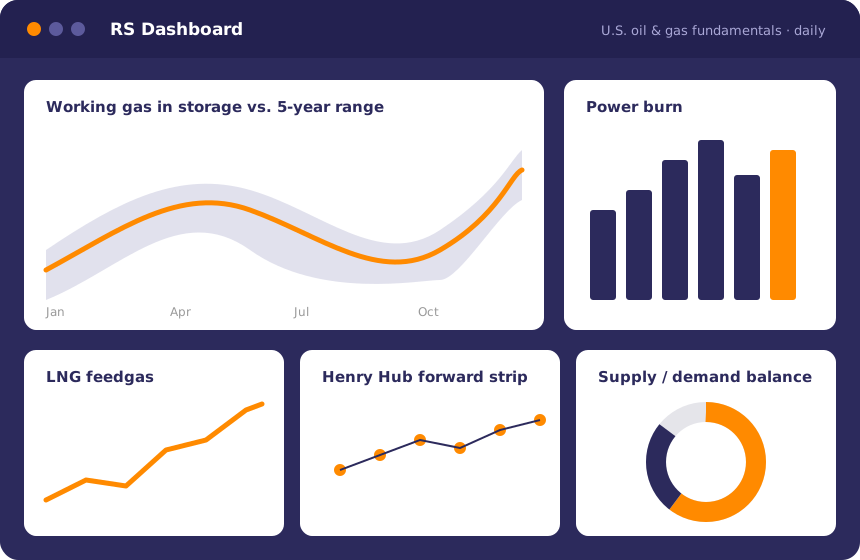
Delivers top-trade-desk insights into the short-term supply, demand, and pricing dynamics of the U.S. oil and gas market. Driven by daily observations of fundamental data, including storage flows and electric-power burns, RS advisory service provides clients with actionable insights for your oil and gas price exposure.
RSCast report is an annual publication that provides a uniquely integrated analysis of the U.S. energy sector. The report is an invaluable reference tool, offering supply, demand and price forecasts for each of the fossil fuels – natural gas, coal, and crude oil – through 2050. It also covers the entire electric power sector, offering power price forecasts at a national level, as well as for each individual power market. In more recent versions, forecasts for renewable energy, battery storage, hydrogen, carbon capture and environmental/emission allowance markets have been added, as well.
RS LNG Outlook offers subscribers a deep dive into the rapidly changing and often opaque global LNG industry. Special focus is given to the second wave of U.S. LNG export projects now under construction, but global issues – including shifting pricing dynamics – are explored in depth, as well. The Outlook includes short-term, country-by-country supply and demand forecasts, as well as insight into the main trends impacting each region. Subscribers also gain access to RS’s comprehensive LNG cloud database, which includes detailed information on every existing, under construction, and proposed LNG import and export project in the world.
Provides the outlook for gas supply and demand fundamentals, and prices, for the current year plus the next two years. Consists of four Quarterly Gas Reports and eight Monthly Gas Reports. The quarterly reports provide a comprehensive and granular assessment of the industry, which includes details such as a forecast of drilling activity.
RS Petroleum Report provides RS’s view of fundamentals for the global market, including supply, demand, trade and price, and is published monthly. On an annual basis, the report includes a comprehensive assessment and outlook for the current year and the next two years, with ten monthly updates, and one report consisting of a comprehensive 20-year outlook.
Downstream & Refining
Refiners face refinery closures and new capacity abroad, shifting product demand as electric vehicles and renewable fuels gain share, tighter carbon regulation and volatile crack spreads. It is critical for industry participants to manage:
Crude Prices and Other Feedstock Costs
Finished Product Prices
Crack Spreads
Overall Refining Margins
Import and Export Dynamics
Hedging
Wholesale and Retail Operations
Regulatory Requirements and Issues
Significant Letter of Credit Needs
Maintenance and Turnaround Expenses
Capital Growth Expenditure Needs
Liquidity Forecasting and Management
Borrowing Base Considerations
Renewable Diesel and Sustainable Aviation Fuel Economics
More
Midstream
As U.S. production grows and LNG exports expand, midstream companies must protect the value of the contracts and services they provide while deciding where to build next. Areas of opportunity include:
Take or Pay Contracts
Gathering Agreements
Processing Contracts
Treating Agreements
Marketing Services
Commodity Price Volatility Risks and Impacts
Capital Expenditure Considerations
Volume Considerations and Impacts
Processing Economics
Pipeline Expansion and Permitting
Hedging
More
Exploration & Production
Volatile commodity prices, a wave of consolidation and investor demands for capital discipline raise significant issues for exploration and production (“E&P”) companies, which are further complicated by global supply and demand imbalances, geopolitical issues and emissions scrutiny.
To protect enterprise value through this challenging climate, E&P companies must successfully navigate:
Plugging and Abandonment Costs
Variance in Federal and State Laws and Regulations
Reserve Reports Uncertainties
Hedging
Borrowing Base Considerations
Joint Operating Agreements
Oil and Gas Leases
Salt Water Disposal
Royalty Transactions
Methane Emissions Rules
More
Oilfield Services
As E&P operators consolidate, hold capital spending flat and demand more from every rig and frac crew, oilfield services (“OFS”) companies face pricing pressure and must invest in technology to stay competitive.
Asset Utilization
Pricing Pressure
Changing Technologies
Pad Drilling
Capital Expenditure Requirements
Geographical Diversity
Regulatory Requirements and Scrutiny
Automation and Digital Drilling
More
Power & Utilities
Rising load from data centers, manufacturing and electrification is colliding with retiring plants, long interconnection queues and affordability concerns. Utilities and generators must manage:
Load Growth Forecasting
Resource Adequacy and Capacity Markets
Generation and Storage Investment
Interconnection and Transmission
Rate Cases and Regulatory Strategy
Power Purchase Agreements
Wildfire and Grid Resilience
Fuel and Power Price Risk
More
Low-Carbon Energy
Capital is flowing into renewables, storage, carbon capture and hydrogen, but returns depend on policy, technology costs and offtake. Developers and investors must navigate: